
 English

Staying connected no longer means tethering yourself to a wall outlet. Whether you're trekking through remote trails, preparing for storm season, or simply working from a sunny patio, a Mini Solar Panel with USB offers a remarkably simple way to keep your devices alive. Unlike traditional solar setups that demand controllers, adapters, and technical know-how, today's USB Solar Panel solutions are genuinely plug-and-play—just unfold, plug in your cable, and let sunlight do the rest.
In this guide, we'll walk through how these compact chargers work, how to choose the right wattage, and how to get the most out of your investment.
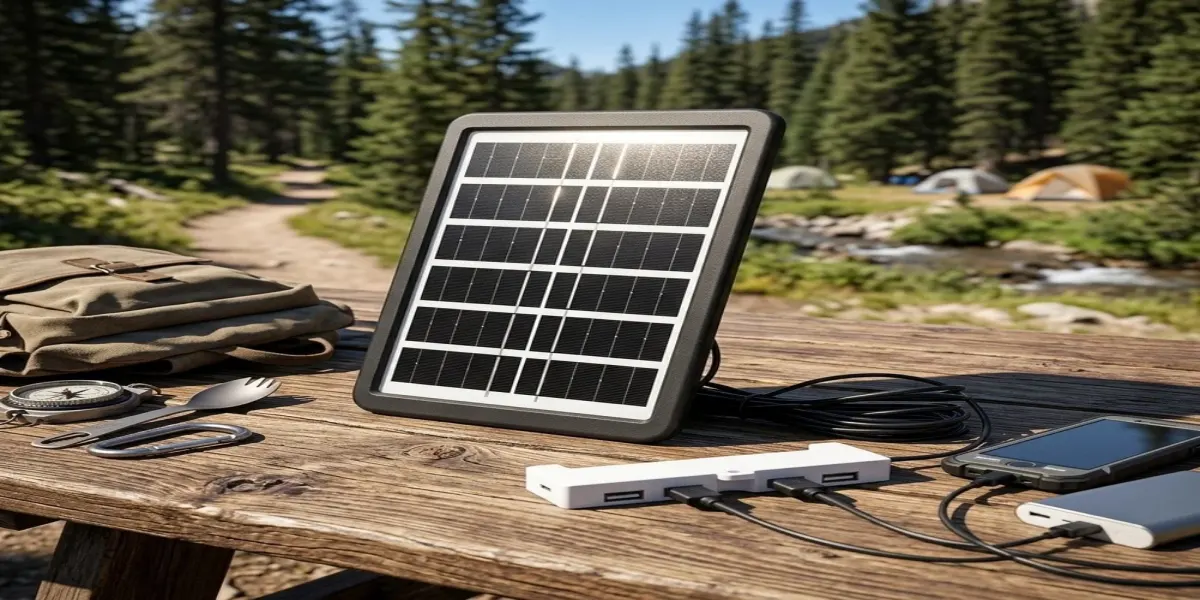
How a Solar Panel with USB Output Actually Works?
At first glance, a Solar Panel with USB Output looks like a simple slab of silicon with a port attached. But inside that compact housing sits a carefully engineered system designed to turn raw sunlight into safe, stable power for your electronics.
The Core Components
Every USB Mini Solar Panel contains three essential elements working in harmony:
Photovoltaic Cells: These monocrystalline or polycrystalline cells capture sunlight and convert it into direct current (DC) electricity. Raw output from the cells typically falls between 5V and 6V.
Voltage Regulator: A built-in DC-DC buck converter stabilizes fluctuating voltage into a steady 5V stream—matching the USB standard your phone expects.
USB Port: The female connector, either USB-A or USB-C, accepts your existing charging cables without extra hardware.
This integration is what separates a true USB Solar Charger Panel from raw solar modules. You don't need external converters or charge controllers to safely top up your phone or power bank.
USB-A vs. USB-C: Which Port Fits Your Gear?
Not all USB ports deliver the same experience. Here's how the options break down:
Port Type | Max Output | Best For | Availability |
|---|---|---|---|
USB-A (Standard) | 5V/2.1A (10.5W) | Older phones, power banks, LED lights | Widest selection, lowest cost |
USB-C PD | 5V–12V/3A (18W+) | iPhone 15, Android fast charging, tablets | Growing, premium pricing |
Dual USB-A | 5V/2.4A shared | Charging two devices at once | Common in 10W+ panels |
If you want maximum future-proofing, look for a Mini Solar Panel with USB-C Power Delivery. If you're working with older cables and tighter budgets, USB-A remains perfectly viable.
The Role of Smart IC Technology
Quality Solar Panel USB Charger units include a smart integrated circuit that communicates with your device. This chip recognizes your phone's power needs and adjusts output accordingly—delivering 0.5A, 1A, or 2.1A without risking overload. Panels lacking this feature may push unregulated current, which can stress sensitive electronics over time.
Real-World Applications for Your Portable USB Solar Panel
The beauty of a Portable USB Solar Panel lies in its versatility. Here are the scenarios where it truly shines.
Backpacking and Ultralight Camping
Every ounce matters on the trail. A compact 5V USB Solar Panel weighing under 250 grams can fold to the size of a smartphone. Strapped to your backpack during a day hike, it harvests enough energy to replenish a 10,000mAh power bank in 8–10 hours of bright sun—keeping your GPS, headlamp, and satellite communicator running indefinitely.
Emergency Preparedness
When the grid goes down, communication becomes survival. A Solar USB Charging Panel in your emergency kit ensures you can power NOAA weather radios, cell phones for emergency calls, and USB-powered LED lanterns. Unlike gas generators, solar panels operate silently, require no fuel, and never run out of energy as long as the sun rises.
Van Life and Remote Work
Vehicle dwellers and digital nomads increasingly rely on USB Solar Power Panel solutions as supplementary charging stations. While rooftop 100W systems handle refrigeration and ventilation, a portable USB panel on the dashboard keeps phones, Bluetooth speakers, and e-readers topped off without draining the house battery.
Choosing the Right Wattage for Your Solar Panel USB Module
Not every user needs the same output. Matching wattage to your lifestyle prevents both underperformance and unnecessary bulk.
1W–5W: Pocket-Sized Emergency Power
These novelty-sized units fit on keychains or slip into wallets. A Mini Solar Panel USB Cable setup at this scale won't fully charge a modern smartphone, but 30 minutes of sun exposure can deliver enough juice for a brief emergency call. Think of these as insurance, not primary power.
5W–10W: The Sweet Spot for Personal Devices
A USB Output Solar Module in this range can maintain your phone's charge during active GPS use or slowly refill a power bank during a beach day. Look for models with kickstands or grommets for easy hanging on backpacks or tent lines.
10W–15W: Multi-Device and Faster Charging
For couples, families, or power users, a 10W+ USB Solar Charging Module offers dual ports and enough output to charge two phones simultaneously. These panels are large enough to feature ETFE coatings and IPX4 water resistance while still packing down small.
20W and Above: Laptop-Ready Power
While pushing the definition of "mini," a 20W+ USB Solar Battery Charger with USB-C PD can sustain laptop charge levels during daylight use or rapidly recharge tablets. These units often combine multiple output ports and advanced voltage regulators.
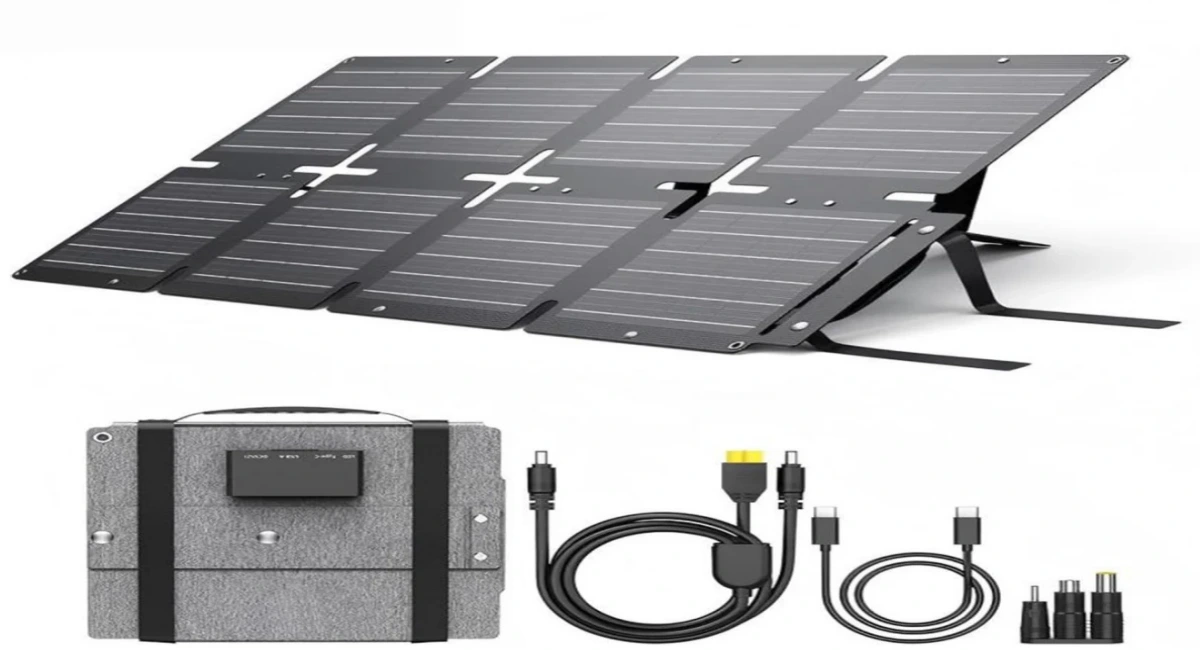
Maximizing Efficiency from Your USB Solar Charging Module
Even the best Solar Panel USB Module underperforms if used incorrectly. Here's how to squeeze every watt from your setup.
Positioning and Sun Angle
Solar output depends heavily on how directly sunlight strikes the cells. For optimal results:
Tilt to your latitude: roughly 35° in southern regions, 50° in northern climates.
Reposition every two hours: morning and afternoon sun angles differ dramatically.
Use reflective surfaces: placing your panel on a white towel or metal car hood captures ground-reflected light.
Understanding Real-World Light Conditions
Manufacturers rate panels at 1,000W/m² irradiance—essentially high noon on a cloudless day. Reality is more variable:
Condition | Light Intensity | Expected Output |
|---|---|---|
Direct noon sun | 1,000 W/m² | 100% rated output |
Light haze | 600–800 W/m² | 60–80% output |
Overcast | 100–300 W/m² | 10–30% output |
Deep shade | 10–50 W/m² | 1–5% output |
A panel behind window glass loses an additional 10–15% due to UV filtering. For best results, place your USB Solar Panel outside the glass.
Direct Charging vs. Power Bank Buffering
There's an ongoing debate in the solar community about the best charging strategy.
Direct charging skips storage losses, making it more efficient. However, charging stops when clouds pass, and intermittent current can stress some device batteries.
Power bank buffering smooths out solar fluctuations. The panel charges the bank, which then charges your device. You sacrifice roughly 15–20% energy to conversion, but gain stability.
The ideal compromise? A USB Solar Battery Charger with a built-in battery—an all-in-one unit that stores energy during the day for on-demand nighttime charging.
Build Quality: What Separates Good from Great
When shopping for a Solar Panel with USB Output, construction details matter as much as wattage.
Cell Type: Monocrystalline vs. Polycrystalline
Monocrystalline: 19–22% efficiency, superior low-light performance, black finish, 25+ year lifespan. Best for serious outdoor use.
Polycrystalline: 15–17% efficiency, blue mottled appearance, lower cost. Adequate for casual, intermittent use.
For mini panels, the efficiency gap is less critical than durability. Choose monocrystalline if budget allows, but don't dismiss polycrystalline for occasional weekend trips.
Panel Construction Materials
Material | Durability | Weight | Best For |
|---|---|---|---|
PET (Polyester) | 2–3 years outdoors | Lightest | Budget, occasional use |
ETFE (Fluoropolymer) | 10+ years, scratch-resistant | Light | Serious outdoor use |
Tempered Glass | Virtually indestructible | Heavy | Fixed installations |
A USB Mini Solar Panel with ETFE coating costs 30–50% more but survives drops, sand abrasion, and accidental steps.
Weather Resistance (IP Ratings)
Outdoor panels face rain, dust, and humidity. Look for:
IPX4: Splash-resistant from any direction—adequate for light rain.
IP65: Dust-tight and protected against water jets—ideal for marine or dusty environments.
IP67: Submersible to 1 meter—overkill for most solar use, but excellent for peace of mind.
Troubleshooting Common USB Solar Charging Issues
Even a quality Portable USB Solar Panel can behave unexpectedly. Here's how to diagnose the most frequent problems.
"Charging" But Battery Percentage Stays Flat
This "charging trap" usually means your panel's output equals your phone's idle power consumption. Causes include low light conditions, active GPS and Bluetooth draining power simultaneously, or a low-quality cable causing voltage drop. Solutions: enable airplane mode, switch to a 20AWG cable, and ensure your panel delivers at least 1A under current conditions.
Panel Gets Hot but Charges Slowly
Solar cells lose 0.3–0.5% efficiency per degree Celsius above 25°C. A Solar USB Charging Panel left on hot sand or a black dashboard can hit 70°C, slashing output by 20%. Prop the panel on sticks to allow airflow underneath, or move it to a cooler grassy area.
Loose or Wobbly USB Port
The USB port endures the most mechanical stress. If it loosens, reinforce the housing with epoxy or use a short USB extension cable to reduce wear on the port itself. When shopping, favor panels with recessed or rubber-shrouded connectors.
Frequently Asked Questions
Can a mini solar panel charge my laptop?
Only if it supports USB-C Power Delivery at 12V or higher. Standard 5V USB Solar Panel units cannot power laptops, which require 19V–20V. Even PD panels under 30W will only slow battery drain during use.
How long does charging take?
In direct sun, a 5W panel charges a modern smartphone in 4–6 hours. A 10W panel cuts that to 2–3 hours. In overcast conditions, multiply those estimates by 3–5x.
Are USB solar panels safe for expensive phones?
Reputable panels with smart ICs are as safe as wall chargers. The voltage stays locked at 5V, and the IC prevents overcurrent. Avoid ultra-cheap units lacking voltage regulation, as they can output 6V+ in bright sun.
Do they work behind glass?
Yes, but at reduced efficiency. Standard glass blocks 10–15% of light; tinted glass blocks 30–50%. Expect 70–85% of rated output when used inside a vehicle or building.
Conclusion
The Mini Solar Panel with USB has evolved from a novelty gadget into a genuinely reliable power tool. From pocket-sized USB Solar Charger Panel units for emergency top-ups to rugged 20W foldable arrays for off-grid workstations, the technology now balances efficiency, durability, and affordability. By understanding your wattage needs, positioning your panel correctly, and choosing the right construction materials, you can stay powered anywhere the sun reaches.
Whether you're building a bug-out bag, upgrading your camping kit, or simply reducing grid dependence, a quality USB Solar Power Panel is one of the smartest additions you can make to your gear collection.

