Home
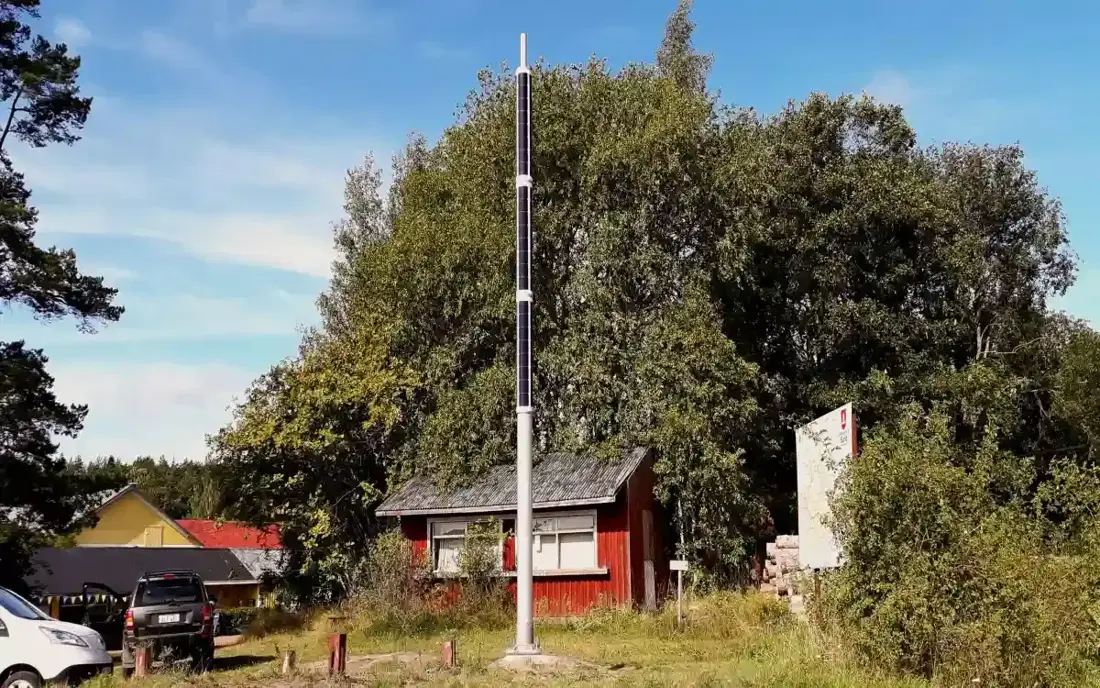
Cylindrical solar panel integrated with a street lighting pole
POLE-INTEGRATED PHOTOVOLTAICSStreet lighting & smart infrastructure
Cylindrical PV · Made for pole integration

Cylindrical Solar Panel Manufacturer for Smart Solar Poles

Explore cylindrical solar panels for street lights, smart poles and outdoor equipment. Hinergy supplies vertical PV modules from China and helps you assess pole fit, electrical compatibility and custom project requirements.

Crystalline silicon PVPole-integrated designOEM project enquiries
01 / UNDERSTAND THE MODULE

What Is a Cylindrical Solar Panel?

A cylindrical solar panel is a photovoltaic module arranged around a pole or tubular structure. Its vertical PV surfaces receive light from different directions as the sun moves. Cylindrical PV modules are used where pole integration, a compact footprint and appearance matter, especially for street lights and smart infrastructure. Depending on construction, related terms include vertical solar panels for poles, pole-integrated solar panels and pole-wrap solar modules. These terms describe the installation concept; they do not guarantee the same materials, electrical design or energy output.

A cylindrical photovoltaic module generates electricity. A complete lighting system also needs a compatible controller, battery, luminaire and supporting pole.

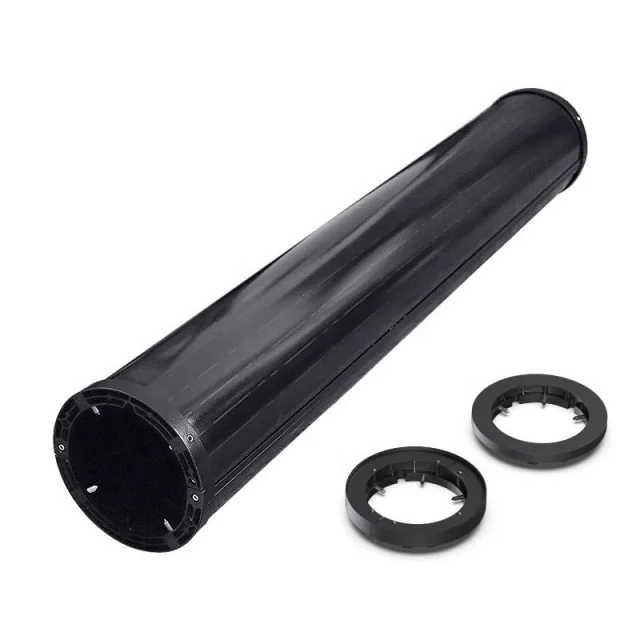
Hinergy cylindrical solar panel product view
A pole-integrated PV module: the photovoltaic component of a wider lighting or monitoring system.
02 / STRUCTURE & MATERIALS

Cylindrical Solar Panel Designs & Materials

Understanding how a cylinder solar panel is built helps you evaluate pole compatibility, installation methods and service requirements. Check the construction of the actual model rather than assuming that every solar pole wrap uses a flexible thin-film laminate.

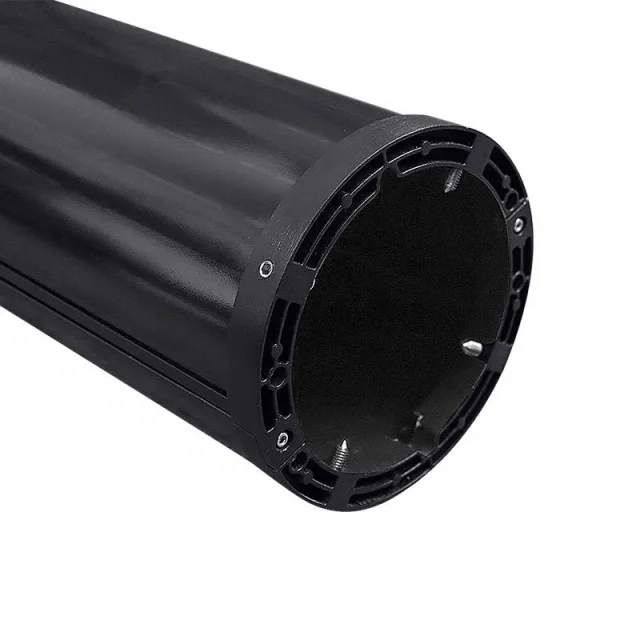
Cylindrical PV module showing pole opening and photovoltaic surfaces
Product structure reference. Use the approved model drawing to confirm dimensions and fixing points.
01 / CELL TECHNOLOGY

Crystalline Silicon Cells

Hinergy’s published cylindrical module uses crystalline silicon solar cells. A tubular shape describes module geometry, not cell chemistry. Confirm cell technology and the finished module’s rated output when comparing suppliers.

02 / ENCAPSULATION

Protective Surface & Sealing

Check the approved glass or laminate construction, edge seals and cable exits. For a glass cylindrical solar panel, confirm glass specification and handling requirements against the model datasheet.

03 / MOUNTING

Pole-Integrated Assembly

A preassembled cylindrical PV module and a flexible solar panel wrapped around a pole can require different fixing methods. Verify clearance, support brackets, fasteners and access for maintenance before purchase.

04 / WIRING

Electrical Connections

Cell interconnection, cable routing and protection influence system behavior under uneven illumination. Ask for a module wiring diagram and controller limits instead of relying on shape alone.

What does a 360° arrangement mean? PV surfaces are distributed around the pole. It does not mean all surfaces receive direct sunlight simultaneously, or that the module always produces more energy than an equal-rated flat panel.
03 / COMPARE THE OPTIONS

Cylindrical Solar Panels vs Flat Solar Panels

The useful comparison is the complete project: available space, pole design, annual energy needs and service access. A vertical cylindrical solar panel is an integration option for outdoor infrastructure; a flat PV module may suit projects with room for a separate mounting assembly.

Comparison of cylindrical and flat photovoltaic modules for pole applications
Selection factorCylindrical / pole-integrated PVFlat solar panel
InstallationIntegrated around a compatible pole; requires the model’s mounting system.Typically uses a separate bracket with a chosen tilt and orientation.
Space & appearanceKeeps PV close to the pole and can simplify the visual profile.Projects away from the pole; may need more clearance.
Light exposureDifferent surfaces receive light at different times; output depends on geometry and wiring.A chosen panel orientation can target the site’s useful solar resource.
ShadingNearby trees, buildings and pole equipment can shade portions of the module.Shading depends on the mounting position and surroundings.
Structural designCheck wind loads, pole strength, module weight and fixing details.Check the panel’s projected area, bracket and pole design.
Cleaning & serviceVertical surfaces may limit accumulation; inspection and cleaning remain site-dependent.Access and cleaning needs depend on tilt, installation height and local soiling.
Best project fitPole-integrated street lighting, smart poles and space-constrained outdoor equipment.Projects allowing a separate PV assembly and site-specific orientation.

Compare daily and seasonal energy yield under equivalent conditions. Rated watts, cell efficiency and daily watt-hours describe different quantities; none alone proves better field performance.

04 / APPLICATIONS

Applications for Street Lights & Smart Poles

Cylindrical solar panels for light poles can support outdoor loads when the solar resource, storage capacity and system controls are matched to the operating schedule. Start with the energy budget for the actual equipment.

Cylindrical solar panel integrated with a street lighting pole

Solar Street Light Poles

A cylindrical solar panel for street lights can place PV close to the supporting pole. Evaluate luminaire wattage, dimming schedule, night length and seasonal charging conditions. Rural roads, residential streets and access roads need different lighting and autonomy targets.

Street lightingPole integrationSeasonal energy sizing
Pole integrated cylindrical solar panels in a smart pole application

Smart Solar Poles

Vertical solar panels for smart poles may supply lighting alongside selected sensors or communication equipment. Add every connected load to the energy calculation, including standby consumption. Continuous devices can change battery and PV requirements substantially.

Smart infrastructureMultiple loadsController compatibility
Cylindrical solar panel application for outdoor off grid equipment

Monitoring & Remote Sensors

A pole-integrated solar panel can be considered for security cameras, environmental sensors and remote monitoring equipment. Check continuous power, communication duty cycles and location-specific shading. Choose storage and controls for the required operating availability.

SurveillanceIoT sensorsRemote equipment
Cylindrical solar panel application in garden and landscape lighting

Park & Pathway Lighting

Cylindrical PV modules offer a pole-focused design for parks, pathways and landscape lighting. Trees and nearby structures can restrict solar access, so confirm the proposed installation position. Match lighting hours and brightness to the available energy rather than appearance alone.

Landscape lightingPathwaysSite shading review
05 / PROJECT SELECTION

How to Choose a Cylindrical Solar Panel

To select a cylindrical solar panel for a light pole, assess daily energy demand, local solar conditions, mounting compatibility and electrical limits together. Choosing a module by rated power alone can overlook the constraints that determine system operation.

01

Daily Energy Demand & Solar Conditions

List each load’s watts and operating hours, including controller and communication consumption. Review the site’s seasonal solar resource and shading. A 100W cylindrical solar panel does not generate 100Wh every hour of the day; charging energy varies with real conditions.

  • Load power and daily schedule
  • Installation location and seasonal conditions
  • Required battery autonomy
02

Pole Diameter & Mounting Fit

Confirm the supporting pole’s outer diameter, shape and available installation height. Check module clearance, brackets, fasteners, weight and service access against the installation drawing. Existing light poles may need structural review before a retrofit.

  • Pole dimensions and material
  • Approved fixing method
  • Wind-load and structural assessment
03

Voltage & Controller Compatibility

Check Vmp, Voc, current and temperature-dependent voltage against the charge controller’s PV input limits. Battery nominal voltage is not the same as module operating voltage. An MPPT controller still needs an appropriate input range and a compatible battery charging profile.

  • Module Voc, Vmp, Isc and Imp
  • Controller input and charging limits
  • Battery chemistry and BMS requirements
04

Environment & Service Requirements

Assess local wind, temperature, salt exposure, dust and possible impact. Request model-specific environmental evidence where needed, including test conditions and duration. Plan inspection and cleaning access instead of treating a vertical solar module as maintenance-free.

  • Applicable model documentation
  • Installation and maintenance access
  • Warranty scope and project requirements

Start with your daily load

Add lighting energy and a continuous auxiliary load. This estimates consumption only; it does not size the PV module or battery.

Estimated load: 448 Wh/day

Lighting W × hours + auxiliary W × 24. System losses and autonomy are additional design inputs.

06 / EXPLORE THE MODULE

Explore Hinergy Cylindrical Solar Panels

Use this product preview to move from selection guidance to model-specific information. Our cylindrical solar panel catalog contains product listings; each product page provides the specifications to check for your system.

Hinergy cylindrical solar panel product view
Published product · Model-specific review

100W Cylindrical Solar Panel

A crystalline silicon cylindrical PV module for pole-integrated solar applications. Confirm the approved specification and mounting drawing for your order before finalizing system design.

Published rated power
100Wp
PV technology
Crystalline silicon
Installation concept
Vertical pole integration
Selection checks
Pole fit & electrical limits
View Module Specifications

Looking for cylindrical solar panel specifications, availability or wholesale pricing? Browse the catalog and request a model-specific quotation.

Browse All Cylindrical Solar Panels
07 / SYSTEM INTEGRATION

Pole Installation & System Integration

Cylindrical solar panel installation combines mechanical mounting with electrical system integration. Use the selected model’s instructions and a qualified installer; the overview below explains the project sequence rather than a universal mounting procedure.

STEP 01

Confirm the Pole

Check diameter, geometry, mounting height, structural suitability and solar exposure. Confirm access for fitting and later servicing.

STEP 02

Secure the Module

Use the approved brackets and fasteners. Follow the model’s handling instructions, clearances and tightening requirements.

STEP 03

Connect the System

Follow the controller’s specified connection sequence. Check polarity, cable sizing, protection, weatherproofing and battery settings.

STEP 04

Verify Operation

Check charging, battery behavior and load settings. Record commissioning results and schedule inspection for the installation site.

Functional connections between cylindrical PV module, charge controller, battery and lighting or monitoring load
Functional overview only. Actual wiring, protection and grounding depend on the equipment and local requirements.
Retrofitting an existing light pole? Share pole drawings, load details and the installation location. A pole-wrap solar panel does not automatically make every existing pole suitable for an off-grid lighting system.
08 / OEM & PROJECT SUPPORT

Custom Cylindrical Solar Panels & OEM Solutions

Defined around
your project.

For a custom cylindrical solar panel, start with the installation and electrical requirements. Hinergy evaluates OEM enquiries for pole-integrated PV modules in China, with the final configuration subject to design review and approval.

Tell us what the module must fit, what it must power and how it will be installed. This gives the design discussion a practical starting point.

01 / ELECTRICAL

Power & Electrical Configuration

Provide load energy, battery voltage, chemistry and controller limits. Discuss rated power, voltage and current targets against the intended system.

02 / MECHANICAL

Dimensions & Pole Integration

Share pole drawings and installation constraints. Review module dimensions, mounting interfaces, assembly access and project-specific structural requirements.

03 / CONNECTIONS

Cables, Connectors & Branding

Discuss cable length, connector compatibility, identification labels and packaging. Confirm available options and minimum order requirements in the quotation.

04 / VERIFICATION

Design Verification & Quality Checks

Define checks around the approved design, including dimensions, electrical output, cable assemblies and packaging. Confirm any requested environmental reports for the exact model.

Mechanical record
Approved dimensions and mounting drawing.
Electrical record
Model-specific parameters and agreed output checks.
Project evidence
Applicable test reports and installation requirements.
Order agreement
Quotation, quantity, sample approval and delivery terms.
09 / PLAN YOUR PROJECT

Project Requirements & Quotation

Request a cylindrical solar panel quotation with the information needed to assess module fit and system compatibility. Pricing, MOQ and lead time depend on the approved configuration, quantity and delivery requirements.

  • Project country and installation location
  • Daily load and operating schedule
  • Pole dimensions, drawings and mounting height
  • Battery and charge controller specifications
  • Required quantity and delivery schedule
  • Requested documentation and custom options

Prefer to email directly?
info@hinergylink.com

This prepares an email in your mail app. Review it and send it to Hinergy; the page does not submit your details automatically.

10 / COMMON QUESTIONS

Frequently Asked Questions

Practical answers about cylindrical solar modules, pole integration and project selection.

Discuss a model-specific question
How do cylindrical solar panels work?

Photovoltaic cells convert incoming light into electricity. In a cylindrical module, PV surfaces are arranged around a pole or tubular structure, so different parts receive light as the sun’s position changes. The electrical output depends on cell arrangement, interconnection, shading and site conditions.

Are cylindrical solar panels more efficient than flat panels?

Cylindrical geometry does not establish higher conversion efficiency or greater daily energy yield. Compare the actual modules and complete installations under equivalent conditions, including rated power, location, shading, orientation, temperature and system losses.

What is the difference between a cylindrical module and a solar pole wrap?

A cylindrical module may be a preassembled structure fitted around a compatible pole. A solar pole wrap can describe a flexible laminate or another pole-integrated assembly. Confirm construction and installation instructions because suppliers do not always use these terms in the same way.

Can a 100W cylindrical solar panel power a street light?

Suitability depends on the light’s daily energy demand, local seasonal charging conditions, controller performance and battery capacity. A 100W rating is not a promise of a particular nightly runtime. Provide the load schedule and installation location for system assessment.

What pole diameter fits a cylindrical solar panel?

The compatible pole diameter is model-specific. Check the approved installation drawing, bracket arrangement and clearance requirements. For an existing pole, also confirm shape, available mounting height, structural suitability and installation access.

Do vertical cylindrical solar panels need cleaning?

Vertical positioning may reduce some accumulation, but dust, salt, bird droppings and other contamination can still affect a module. Plan inspection and cleaning according to local conditions and the manufacturer’s instructions. Do not assume a cylindrical panel is maintenance-free.

Are Hinergy cylindrical solar panels made from thin-film cells?

Hinergy’s published 100W cylindrical solar panel uses crystalline silicon cells. Cylindrical refers to module shape, not a particular cell technology. Check the selected model’s approved datasheet when comparing crystalline silicon, flexible and thin-film alternatives.

Can Hinergy customize cylindrical solar panels for OEM projects?

Hinergy evaluates custom cylindrical solar panel enquiries using pole drawings, electrical targets, environmental requirements and order quantity. Available power, dimensions, cables, connectors and branding options must be confirmed through design review and a model-specific quotation.

Leave a Message
Leave A Message
Subscribe

About Us

Founded in 2002, Hinergy has established a global network covering production, sales and service across more than 80 countries and regions worldwide.
 

Solutions

Products

Contact Us

 No.13, LeRong RD. High-Tech Zone, Qingdao, China 
  +86-13589299688
Copyright © 2025 Hinergy All rights reserved. | Sitemap | Privacy Policy