



Electricity has become an essential part of modern life, yet millions of households still struggle with unreliable power supplies, rising utility bills, or limited access to the electrical grid. In many developing regions, frequent blackouts interrupt daily routines, while remote villages and rural communities often remain completely disconnected from public electricity networks. Even in cities with stable infrastructure, unexpected outages caused by storms or aging power systems continue to create inconvenience and safety concerns.
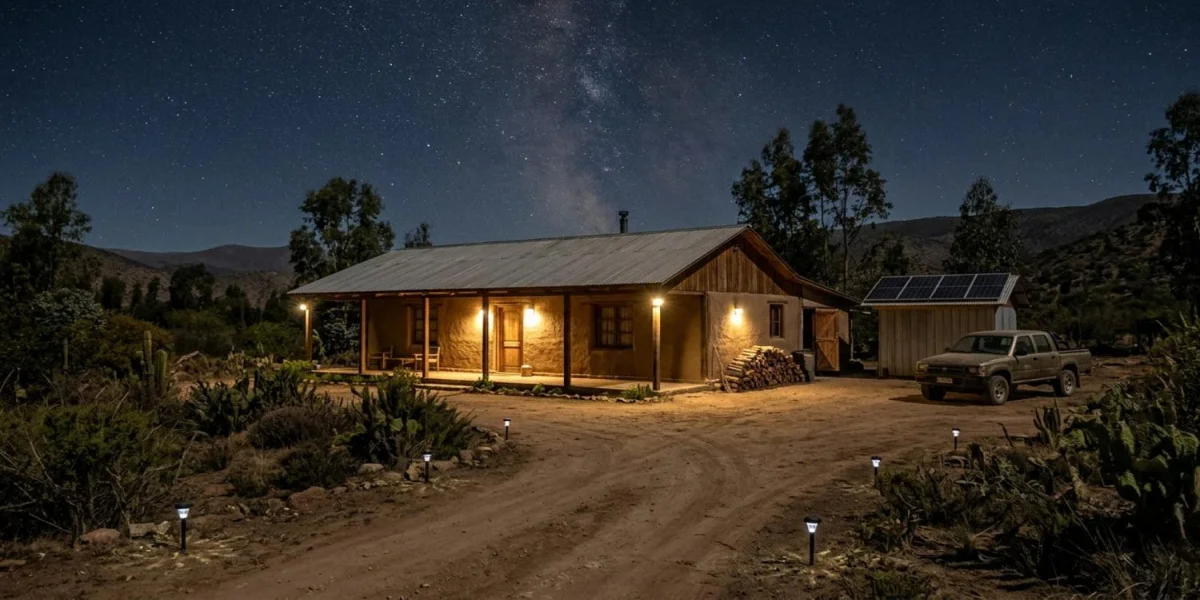
These challenges have accelerated the demand for clean, independent energy solutions. A Solar Powered Home Lighting System Without Grid allows families to generate and store their own electricity directly from sunlight, providing dependable lighting whenever it is needed. Unlike conventional lighting that depends entirely on utility power, solar lighting operates independently, making it an ideal solution for both everyday household use and emergency preparedness.
Traditional lighting methods such as candles and kerosene lamps have long been used where electricity is unavailable, but they come with significant disadvantages. Open flames increase the risk of fire, while kerosene produces smoke and harmful emissions that can negatively affect indoor air quality and long-term health. In contrast, modern solar home lights use high-efficiency photovoltaic panels, rechargeable batteries, and energy-saving LED technology to deliver bright, clean, and safe illumination without fuel costs or environmental pollution.
Today's solar home lighting system has evolved far beyond a simple lamp powered by a small solar panel. Many systems now include multiple LED lights, USB charging ports, intelligent battery management, mobile phone charging, radio functions, and even the ability to power DC televisions or fans. Whether you are searching for a compact home solar lamp for daily use or a complete solar power home lighting system for an off-grid house, there are solutions designed for almost every application and budget.
This comprehensive guide explains everything you need to know before choosing a solar lighting system for home. You'll discover how these systems work, why they have become one of the fastest-growing renewable energy products worldwide, what components determine their performance, and how to select the right model for your home, business, or project.
Why Choose a Solar Home Lighting System?
Choosing a solar home lighting system is no longer just about reducing electricity bills. For many households around the world, it represents greater energy independence, improved safety, and a more sustainable way of living. Whether installed in an urban apartment, a rural village, a farm, or a temporary shelter, a well-designed solar lighting system provides dependable illumination while minimizing operating costs.
Lower Electricity Costs with Long-Term Value
One of the primary reasons homeowners invest in a solar lighting system for home is its ability to reduce ongoing energy expenses. After the initial purchase, sunlight becomes the system's primary energy source, eliminating monthly electricity costs for lighting.
Unlike conventional household lighting that relies on AC power conversion, many solar lighting systems operate directly on efficient DC power. This design reduces energy loss and allows multiple LED lamps to operate for extended periods using relatively small battery capacity.
As manufacturing technology has improved, the solar home lighting system price has become increasingly affordable. Buyers can now choose systems ranging from compact lighting kits for small households to larger solutions capable of powering several rooms, USB devices, televisions, and DC fans. Over the lifetime of the system, the savings on electricity often exceed the initial investment.
Clean Energy That Creates a Healthier Home
Solar lighting is also an environmentally responsible choice. Unlike diesel generators or kerosene lamps, a solar power home lighting system produces no greenhouse gas emissions during operation and requires no fuel deliveries or ongoing combustion.
Modern LED lights consume significantly less electricity than traditional incandescent bulbs while producing brighter, more comfortable illumination. High-quality LEDs provide stable, flicker-free lighting that helps reduce eye fatigue during reading, studying, or evening activities.
For families with children or elderly members, replacing candles or fuel-based lamps with a household solar lighting system also improves indoor safety by eliminating open flames and harmful smoke.
Reliable Lighting During Emergencies
Power interruptions have become increasingly common due to severe weather, overloaded electrical grids, and natural disasters. During these situations, an Emergency Solar Lighting System For Home provides immediate backup lighting without requiring fuel, generators, or complicated installation.
Because energy is stored in rechargeable batteries throughout the day, lighting remains available even after sunset or during extended blackouts. For households that experience unstable electricity, solar lighting provides peace of mind and greater resilience during emergencies.
The same reliability makes an Off Grid Solar Lighting System For Home particularly valuable in remote villages, mountain communities, islands, farms, and construction sites where grid electricity is unavailable or prohibitively expensive. A Solar Powered Home Lighting System Without Grid enables families to enjoy dependable lighting regardless of local infrastructure.
Simple Installation and Everyday Convenience
Another reason for the growing popularity of solar lighting is its ease of installation. Most systems are supplied as complete kits with pre-configured cables, connectors, and LED lamps. Users can typically install the system without specialized tools or professional electricians.
A Mini Portable Solar Home Lighting System offers even greater flexibility. Lightweight and easy to transport, it is ideal for camping, outdoor markets, mobile businesses, temporary housing, disaster relief operations, and recreational travel. With minimal maintenance requirements and no recurring energy costs, portable solar lighting provides reliable illumination wherever sunlight is available.
How Does a Solar Home Lighting System Work?
At first glance, a solar home lighting system may seem simple—a solar panel connected to a few lights. In reality, every component plays a specific role in collecting, storing, managing, and delivering electricity efficiently. Understanding how these systems work not only helps you choose the right model but also ensures you get the best performance throughout its service life.
A typical solar power home lighting system consists of four key components: a solar panel, a charge controller, a rechargeable battery, and LED lights. These parts work together in a continuous energy cycle.
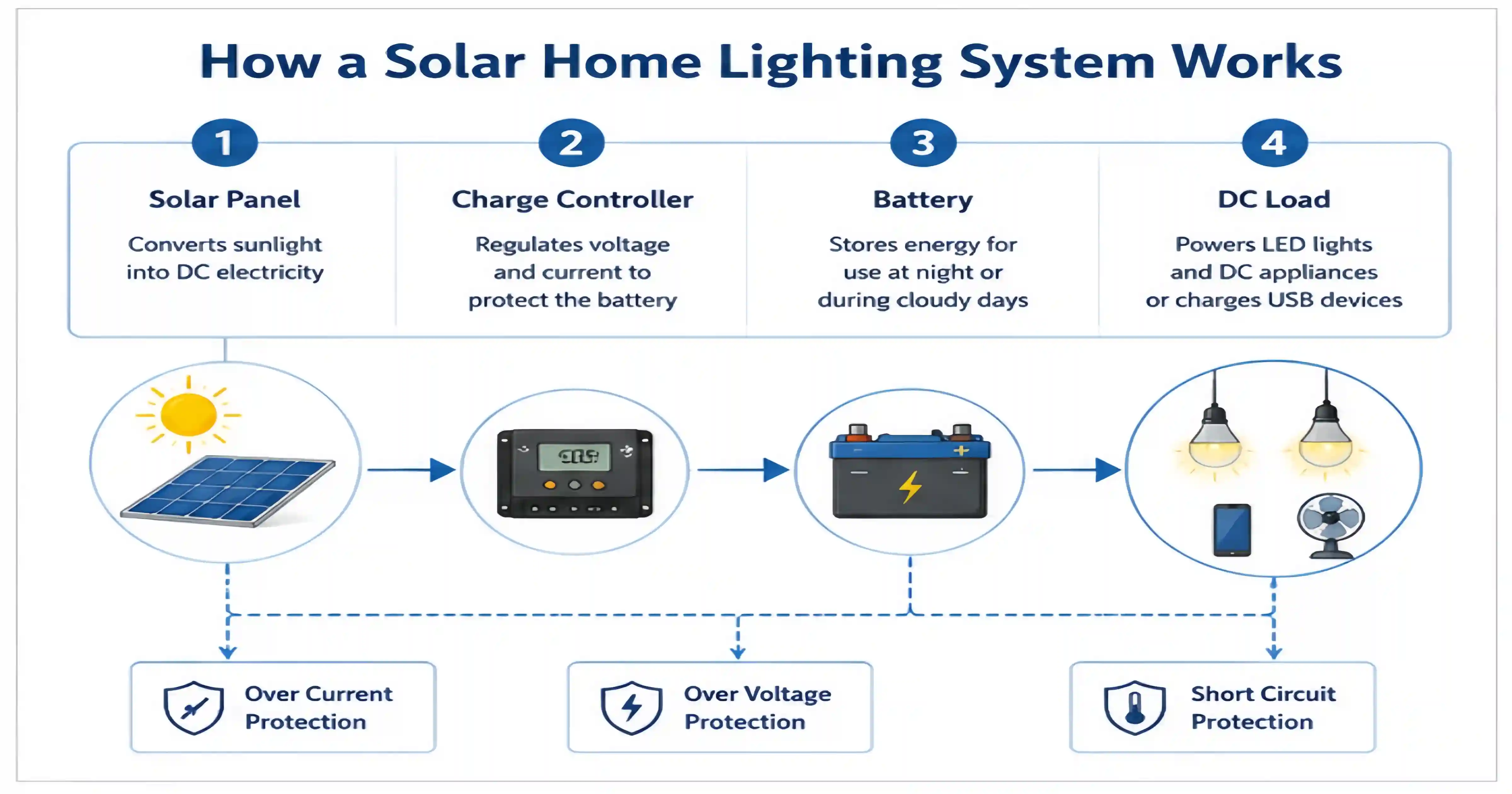
A complete solar home lighting system converts sunlight into clean electricity, stores it in a rechargeable battery, and delivers stable DC power for lighting and small appliances.
Step 1: Solar Panels Capture Sunlight
The process begins with the solar panel. During daylight hours, photovoltaic (PV) cells absorb sunlight and convert it into direct current (DC) electricity. The amount of energy generated depends on several factors, including panel size, conversion efficiency, sunlight intensity, and installation angle.
High-efficiency monocrystalline solar panels generally produce more electricity in limited installation space, making them ideal for residential applications. In regions with abundant sunshine, even compact panels can generate enough energy to power multiple LED lights and charge small electronic devices.
Step 2: The Charge Controller Regulates Power
Electricity produced by the solar panel does not flow directly into the battery. Instead, it first passes through a charge controller, which acts as the system's intelligent management center.
The controller regulates charging voltage and current, preventing overcharging during sunny conditions and protecting the battery from excessive discharge at night. Many advanced controllers also include short-circuit protection, overload protection, reverse polarity protection, and temperature compensation to improve overall reliability.
Without this component, battery life could be significantly reduced.
Step 3: Energy Is Stored for Nighttime Use
The rechargeable battery stores excess electricity generated during the day so it can be used after sunset or during cloudy weather.
Most modern Home Solar Light Kit With Battery products use lithium-ion or LiFePO₄ batteries because they offer higher energy density, faster charging, longer cycle life, and lower maintenance compared with traditional lead-acid batteries.
Battery capacity determines how long the lighting system can operate. A larger battery allows more hours of illumination and provides greater energy reserves during periods of limited sunshine.
Step 4: LED Lights Deliver Efficient Illumination
When daylight fades, the stored electricity powers energy-efficient LED lights. LEDs consume very little electricity while producing bright, uniform illumination.
Many systems also provide USB charging ports for mobile phones, radios, Bluetooth speakers, security cameras, and other low-power DC devices. Some larger models can even support DC televisions and fans, making them practical solutions for everyday household living.
Because all components are designed to work together, a complete Home Solar Light Kit With Battery can be installed quickly without purchasing additional electrical accessories.
Core Components of a Solar Home Lighting System
Although every solar lighting system for home follows the same operating principle, the quality of its individual components determines overall performance, efficiency, and lifespan. Choosing a system with premium components can provide reliable service for many years while reducing maintenance costs.
Solar Panel: The System's Energy Source
The solar panel is responsible for collecting solar energy and converting it into usable electricity. Its performance directly affects charging speed and overall system output.
Several factors influence panel efficiency:
Cell technology (monocrystalline or polycrystalline)
Panel wattage
Sunlight exposure
Installation angle
Local climate conditions
For households with higher daily electricity demand, larger solar panels can recharge batteries more quickly and maintain consistent performance during cloudy weather.
Many domestic solar lighting system installations now use high-efficiency monocrystalline panels capable of generating more electricity from limited roof space.
Battery: The Heart of Energy Storage
If the solar panel collects energy, the battery stores it for later use.
Battery capacity is usually measured in amp-hours (Ah) or watt-hours (Wh). Larger batteries provide longer operating times and better backup during consecutive cloudy days.
Today's premium Home Solar Light Kit With Battery solutions increasingly use LiFePO₄ batteries because they offer several advantages:
Longer service life
Greater charging efficiency
Improved thermal stability
Higher safety
Lower maintenance requirements
For users in areas with unstable electricity, investing in a larger battery often provides greater long-term value than simply increasing solar panel size.
LED Lights: Maximum Brightness with Minimal Power Consumption
LED technology has transformed residential lighting by combining high brightness with extremely low energy consumption.
A modern solar led home light system can produce excellent indoor illumination while consuming only a fraction of the electricity required by traditional incandescent bulbs.
Quality LED lights also provide:
Long operating life
Low heat generation
High luminous efficiency
Stable brightness
Minimal maintenance
These characteristics make LED lighting ideal for bedrooms, kitchens, classrooms, shops, clinics, and community centers.
Charge Controller: Protecting the Entire System
Often overlooked by buyers, the charge controller is one of the most important components in any solar home lighting system.
A high-quality controller continuously monitors battery voltage, charging current, and power output. It automatically adjusts charging parameters to maximize battery lifespan while protecting the entire system against abnormal operating conditions.
Advanced models may also include:
Intelligent charging algorithms
USB output management
Battery level indicators
Automatic dusk-to-dawn operation
Load management functions
Low-voltage disconnect protection
Although inexpensive systems sometimes use simplified controllers, investing in a professionally designed controller can significantly improve system reliability over many years of daily use.
Applications of Solar Home Lighting Systems
One reason the global market for solar home lighting systems continues to expand is their remarkable versatility. Modern systems are no longer limited to basic household lighting—they now support a wide range of residential, commercial, and humanitarian applications.
For rural families, a solar home lighting system for villages provides dependable evening lighting for cooking, studying, and daily activities without relying on expensive diesel generators or unreliable utility networks. Schools, health clinics, and community centers also benefit from clean, sustainable lighting in areas where grid electricity is unavailable.
A portable solar lights for home solution is equally valuable for camping, RV travel, cabins, fishing trips, and outdoor events. Vendors operating night markets or temporary stalls can power LED lighting without noisy generators, improving both convenience and customer experience.
Indoor applications are equally diverse. A solar indoor lighting system can illuminate garages, workshops, storage rooms, greenhouses, or newly constructed buildings before permanent electrical wiring is installed. For households seeking greater energy independence, a domestic solar lighting system offers an affordable way to reduce electricity costs while ensuring reliable lighting during unexpected outages.
As solar technology continues to improve, these systems are becoming an essential energy solution for homes, humanitarian aid projects, disaster relief, agricultural operations, and off-grid communities around the world.
How to Choose the Best Solar Home Lighting System?
Choosing the best solar home lighting system is not simply a matter of purchasing the largest or most expensive model. The ideal system is the one that matches your daily energy requirements, installation environment, and future expansion plans. Taking a few minutes to evaluate your needs before buying can help you avoid unnecessary costs while ensuring reliable performance for years to come.
Use this quick decision guide to choose the right solar home lighting system for your home.
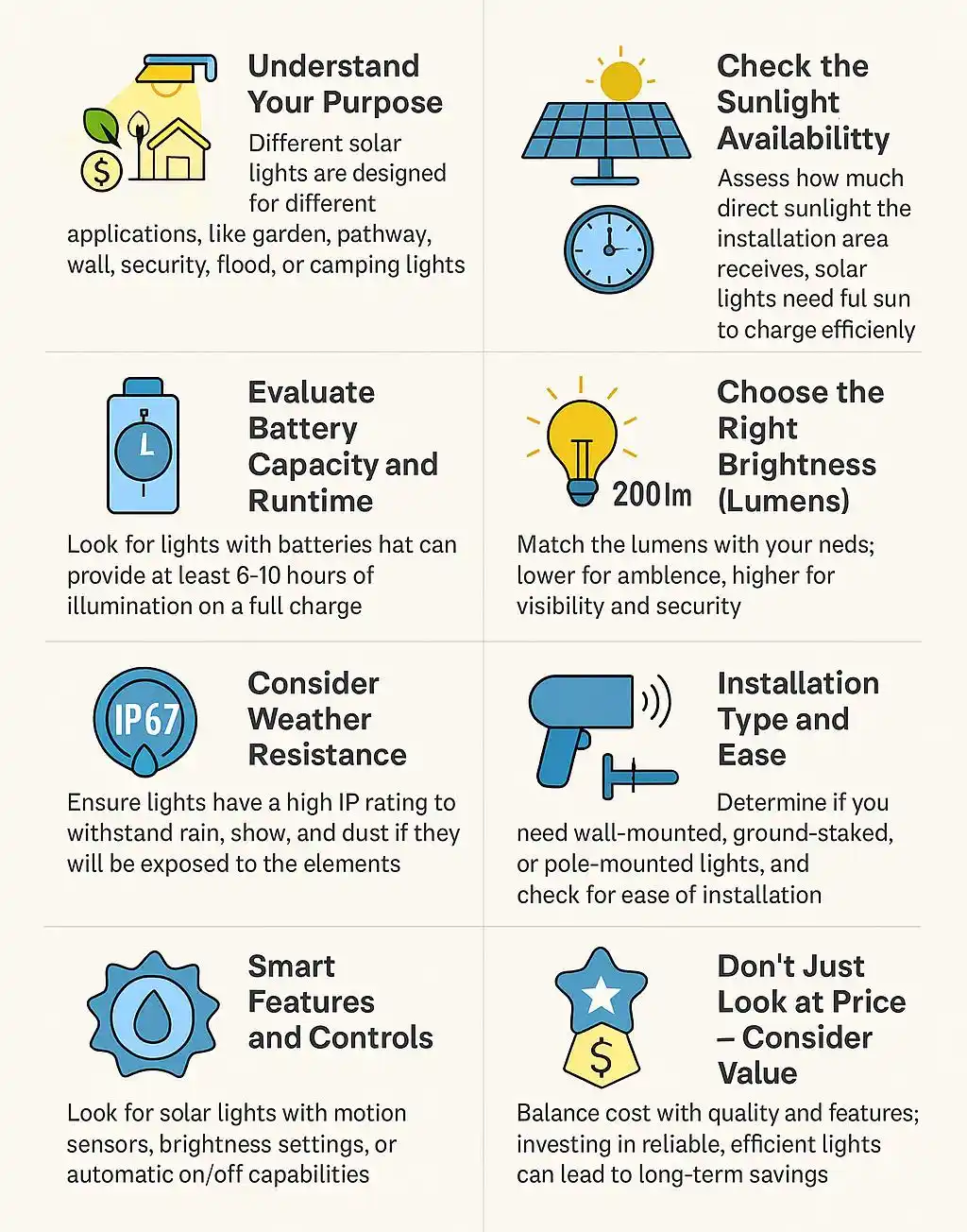
Assess Your Daily Lighting Needs
Start by calculating how the system will be used. Ask yourself a few practical questions:
How many rooms need lighting?
How many LED lights will be used simultaneously?
How many hours will the lights operate each night?
Will the system also power USB devices, a DC television, a fan, or a radio?
A small family may only require three or four LED lamps for several hours each evening, while a larger household may need additional lighting and power for small appliances.
Choosing a system based on actual daily consumption rather than maximum capacity often results in better value and higher energy efficiency.
Choose the Right Battery Capacity
The battery determines how long your lighting system will continue operating after sunset or during cloudy weather.
For households with frequent power outages, selecting a larger battery provides longer backup time and greater peace of mind. Buyers in remote regions should also consider several consecutive cloudy days when estimating battery capacity.
Premium lithium or LiFePO₄ batteries generally cost more initially, but their longer cycle life, higher efficiency, and lower maintenance requirements make them a smarter long-term investment.
When comparing products, don't focus solely on battery voltage. Capacity, battery chemistry, cycle life, and manufacturer quality all influence real-world performance.
Match the Solar Panel to Local Sunlight Conditions
Solar panels should be selected according to local solar resources and expected daily energy consumption.
Areas with abundant sunshine may require relatively small panels, while regions with frequent cloud cover often benefit from larger modules that can recharge batteries more efficiently.
Proper installation is equally important. Position the solar panel where it receives maximum sunlight throughout the day and avoid shading from trees, buildings, or nearby structures.
A correctly sized solar panel improves charging efficiency, shortens recharge time, and helps maintain stable performance throughout the year.
Select the Right System for Your Application
Different users have different requirements, so choosing a system designed for your specific application is essential.
For everyday household lighting, a standard solar lighting system for home offers reliable illumination for bedrooms, kitchens, living areas, and study rooms.
If portability is a priority, a Mini Portable Solar Home Lighting System is an excellent choice for camping, outdoor markets, fishing trips, temporary shelters, RV travel, and mobile businesses. These compact units are lightweight, easy to transport, and require virtually no installation.
Families living in areas with unstable electricity should consider an Emergency Solar Lighting System For Home. These systems provide dependable backup lighting during unexpected blackouts and natural disasters, ensuring essential illumination when grid power is unavailable.
For rural communities, farms, mountain cabins, islands, and other remote locations, an Off Grid Solar Lighting System For Home remains one of the most practical energy solutions. A Solar Powered Home Lighting System Without Grid operates independently from public utilities, providing reliable lighting anywhere sunlight is available.
Compare Total Value, Not Just Price
Many buyers make the mistake of comparing products based only on the lowest purchase price.
Although the solar home light system price is an important consideration, overall value depends on many additional factors, including:
Solar panel efficiency
Battery lifespan
LED quality
Charge controller performance
Warranty period
Technical support
Availability of replacement parts
A slightly higher-quality system often delivers better long-term performance and lower maintenance costs than a cheaper alternative.
Similarly, the overall solar home lighting system price should be evaluated over the entire product lifecycle rather than only at the time of purchase.
Choose a Reliable Manufacturer
Whether purchasing a single unit or sourcing products for distribution, selecting the right supplier is just as important as choosing the product itself.
A professional manufacturer should offer:
Proven manufacturing experience
ISO-certified production processes
CE, RoHS, or other international certifications
Strict quality control procedures
OEM and ODM customization services
Responsive after-sales support
Long-term product availability
For international distributors, NGOs, government projects, and engineering contractors, working directly with an experienced manufacturer also improves product consistency, technical support, and supply chain reliability.
Before making a purchasing decision, it is helpful to compare solar lighting with conventional lighting solutions. The following infographic highlights the key differences in operating costs, reliability, safety, maintenance requirements, and environmental impact.
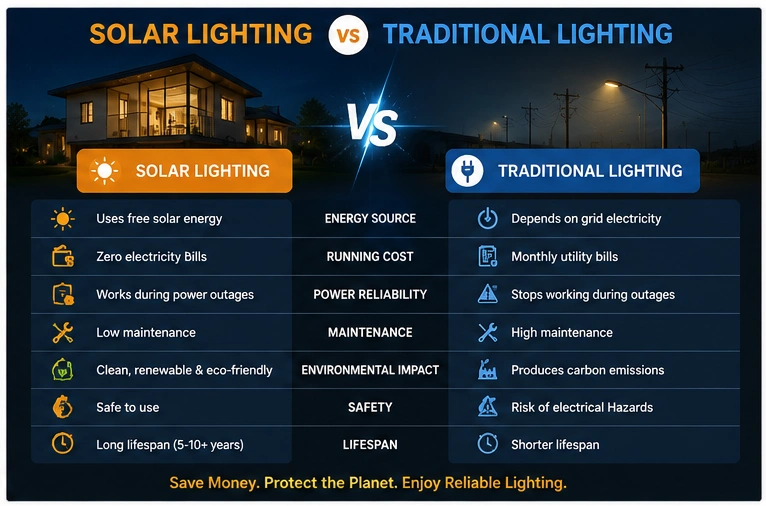
As the comparison shows, a solar home lighting system offers significant long-term advantages over traditional lighting. Although the initial investment may be higher, homeowners benefit from lower operating costs, greater resilience during power outages, and cleaner energy throughout the product's lifetime.
Solar Home Lighting System vs. Traditional Lighting
The following comparison highlights why solar lighting has become an increasingly popular alternative to conventional lighting solutions.
Feature | Solar Home Lighting System | Grid-Powered Lighting | Kerosene Lamp |
|---|---|---|---|
Electricity Cost | No ongoing electricity cost | Monthly utility bills | Continuous fuel expense |
Installation | Simple and flexible | Requires electrical wiring | No wiring required |
Power During Outages | ✔ Continues operating | ✘ Stops working | ✔ Available |
Environmental Impact | Clean renewable energy | Depends on power source | High emissions and indoor pollution |
Safety | No open flame | Safe under normal conditions | Fire and burn hazards |
Maintenance | Low | Low | Frequent fuel refilling |
Lifespan | 5–10+ years (depending on battery) | Varies by installation | Limited |
Best Applications | Homes, villages, cabins, camping, emergency backup | Urban homes with stable grids | Temporary emergency use only |
For households seeking greater energy independence, solar lighting combines the convenience of modern electrical systems with the resilience of an independent power source.
Maintenance Tips for Long-Term Performance
A high-quality solar home lighting system requires very little maintenance, but a few simple practices can significantly improve efficiency and extend its service life.
Keep the Solar Panel Clean
Dust, leaves, bird droppings, and other debris reduce the amount of sunlight reaching the photovoltaic cells. Cleaning the panel periodically with water and a soft cloth helps maintain maximum charging efficiency.
Install the Panel in Full Sunlight
Avoid placing the panel beneath trees, beside tall buildings, or in locations where shadows move across the surface during the day. Even partial shading can noticeably reduce energy production.
Protect the Battery
Rechargeable batteries perform best when operated within their recommended temperature range. Avoid storing the system in extremely hot or freezing environments whenever possible.
If the system will not be used for an extended period, recharge the battery every few months to maintain its health.
Inspect Cables and Connectors
Occasionally check wiring connections for looseness, corrosion, or physical damage. Well-maintained connectors improve charging efficiency and reduce the risk of electrical faults.
Follow the Manufacturer's Recommendations
Every system is designed differently. Following the manufacturer's maintenance schedule, operating instructions, and battery charging recommendations helps maximize performance and product lifespan.
Common Buying Mistakes to Avoid
Many first-time buyers focus only on advertised wattage or the lowest price, overlooking factors that have a much greater impact on long-term performance.
Some of the most common mistakes include:
Buying a system that is too small for actual lighting needs.
Ignoring battery quality and cycle life.
Choosing products with low-efficiency solar panels.
Installing panels in shaded locations.
Purchasing from suppliers without quality certifications or after-sales support.
Comparing products based only on price rather than total lifecycle value.
By avoiding these common mistakes, buyers can enjoy a more reliable, efficient, and cost-effective solar lighting solution for many years.
Frequently Asked Questions (FAQ)
1. What is a solar home lighting system?
A solar home lighting system is a self-contained lighting solution that uses solar panels to convert sunlight into electricity. The generated energy is stored in a rechargeable battery and later used to power LED lights and other low-voltage DC devices. Most systems include a solar panel, battery, charge controller, LED lamps, cables, and USB charging ports.
2. How long can a solar home lighting system provide light?
The operating time depends on the battery capacity, the number of lights connected, and daily energy consumption. Most household systems can provide 6 to 12 hours of continuous lighting after a full day of charging. Larger systems with higher-capacity batteries can operate even longer.
3. Can a solar home lighting system work on cloudy or rainy days?
Yes. Because electricity is stored in the battery during sunny periods, the system can continue supplying power when sunlight is limited. Choosing a model with a larger battery capacity provides additional backup during several consecutive cloudy or rainy days.
4. Can it charge mobile phones and power other devices?
Most modern solar home lighting kits include USB output ports for charging smartphones, tablets, radios, Bluetooth speakers, and other small electronic devices. Some larger systems can also operate DC televisions, fans, Wi-Fi routers, or security cameras, depending on their power rating.
5. Is a solar home lighting system suitable for off-grid areas?
Absolutely. An Off Grid Solar Lighting System For Home is specifically designed for locations where utility electricity is unavailable or unreliable. It is widely used in rural villages, farms, mountain cabins, islands, construction sites, humanitarian projects, and disaster relief operations.
6. How long does the battery last?
Battery life depends on battery chemistry and usage habits. High-quality lithium-ion batteries generally last 5–8 years, while premium LiFePO₄ batteries can exceed 10 years or several thousand charge cycles with proper maintenance.
7. How much does a solar home lighting system cost?
The solar home lighting system price varies according to solar panel size, battery capacity, number of LED lights, output ports, and additional features. Entry-level systems are suitable for basic household lighting, while larger systems designed for multiple rooms and DC appliances require a higher investment. When comparing products, consider overall value, warranty, and expected service life rather than purchase price alone.
8. How do I choose the best solar home lighting system?
Start by evaluating your daily lighting requirements, battery backup time, available installation space, and any additional appliances you plan to power. Selecting products from an experienced manufacturer with international certifications, quality components, and dependable after-sales support will help ensure long-term performance and reliability.
Conclusion
A modern solar home lighting system is much more than an alternative to conventional lighting—it is a practical investment in energy independence, safety, and sustainability. By combining efficient solar panels, intelligent charge controllers, long-lasting batteries, and high-performance LED lights, these systems provide reliable illumination without ongoing electricity costs or dependence on the utility grid.
Whether you need a Solar Powered Home Lighting System Without Grid for a remote village, an Emergency Solar Lighting System For Home for blackout preparedness, or a Mini Portable Solar Home Lighting System for camping and mobile applications, today's technology offers solutions for virtually every environment and budget.
As demand for clean energy continues to grow worldwide, solar lighting is becoming an essential choice for homeowners, humanitarian organizations, contractors, and businesses alike. By selecting a high-quality system that matches your energy needs and purchasing from a trusted manufacturer, you can enjoy years of dependable performance while reducing both energy costs and environmental impact.
Why Choose Hinergy?
At Hinergy, we specialize in designing and manufacturing reliable solar lighting solutions for residential, commercial, and humanitarian applications. Our product portfolio includes solar home lighting systems, portable solar lighting kits, off-grid solar power systems, and customized OEM/ODM solutions for distributors and project developers worldwide.
Every system is engineered with carefully selected components to deliver dependable performance, long service life, and easy installation. Whether you need a compact lighting kit for a single household or a scalable solution for rural electrification projects, our team can help you identify the right product for your application.
Explore our complete range of solar lighting products or contact our technical team for professional recommendations tailored to your market and project requirements.